
Freshwater aquaculture can become more circular only if its residual materials are proven to be safe and useful. Recovering sludge or producing new biomass is not enough: researchers must understand what these materials contain before deciding whether they can be used in fish feeds or other applications.
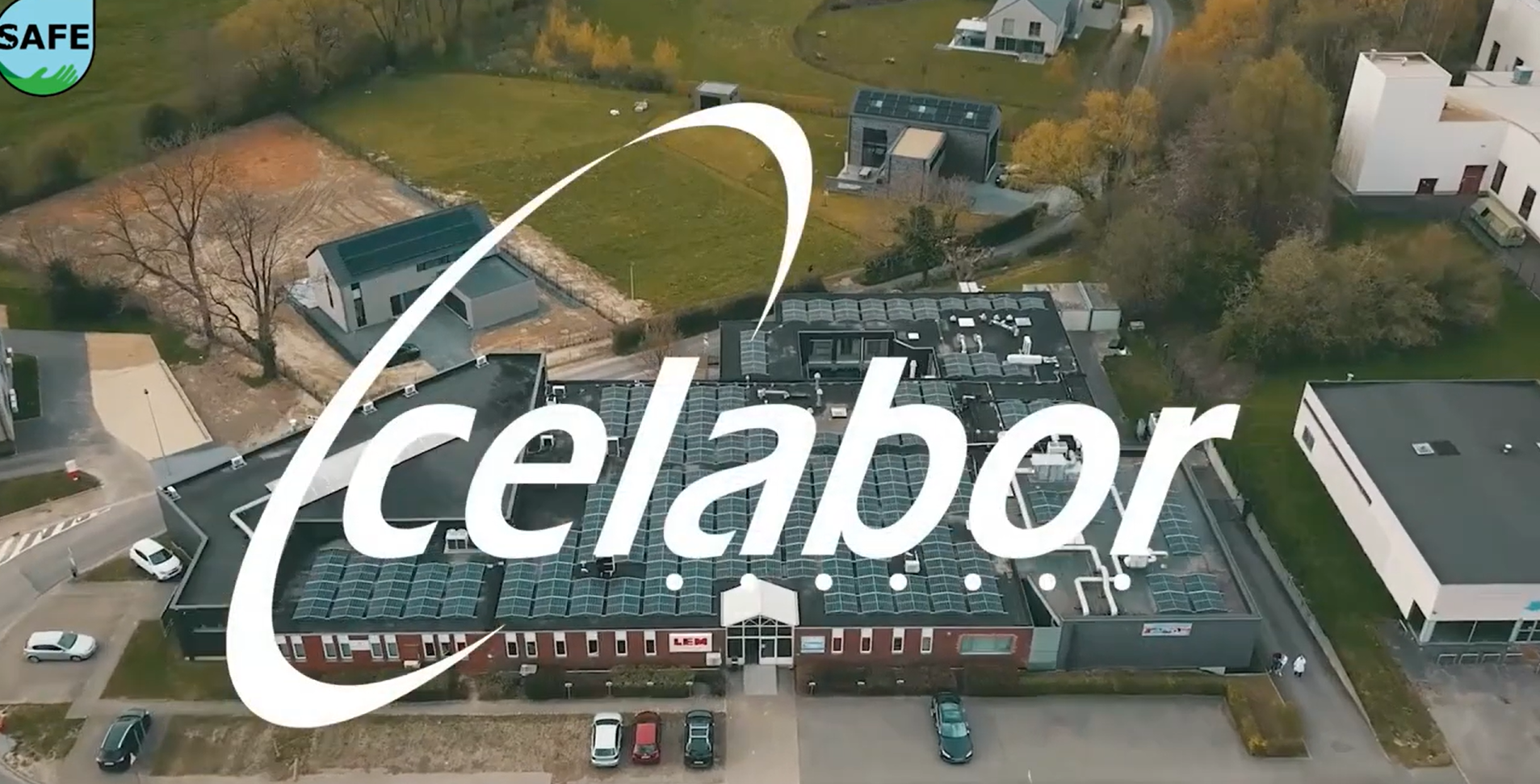
In a new Technology Readiness video from the SAFE project, Belgian research and innovation partner CELABOR presents the analytical work supporting this transition. Its researchers assess the safety, nutritional composition and potentially beneficial properties of aquaculture residual streams and the biomasses produced by SAFE partners.
The analytical gateway to circularity
SAFE is exploring how aquaculture sludge, algae, mushrooms, insects, worms and plant materials can contribute to more circular freshwater aquaculture systems. Some of these biomasses could provide ingredients for sustainable fish feeds, while others may have potential in additional high-value applications.
However, circularity does not remove the need for safety and quality controls. A material originating from a biological production system cannot automatically be treated as a feed ingredient simply because it contains nutrients.
Reliable characterisation is therefore the bridge between recovering a residual material and putting it to productive use.
CELABOR leads the SAFE work package dedicated to characterising the safety, nutritional value and bioactive properties of the project’s materials. Its findings help other SAFE partners decide which ingredients are sufficiently promising to advance to feed development and testing.
Checking safety before reuse
The first step is to assess aquaculture effluents and sludge before they enter the SAFE valorisation pipeline.
CELABOR analyses these materials for potentially hazardous substances, including aflatoxins and heavy metals. This screening is essential because contaminants present in the original residual stream could be transferred into subsequently produced biomass or ingredients.
Identifying these risks at an early stage protects the integrity of the development process. It also prevents resources from being spent on materials that may not be suitable for further use.
The analysis does not, by itself, transform waste into feed. Instead, it establishes whether a material can responsibly proceed to the next stage of research.
Understanding nutritional composition
Once biomasses have been produced by SAFE partners, CELABOR examines their nutritional and chemical composition using a combination of conventional laboratory procedures and advanced extraction and analytical methods.
Total protein content is determined using the Kjeldahl method, while liquid chromatography is used to analyse amino acids. These measurements provide essential information about the nutritional potential of a biomass and its possible role in fish-feed formulation.
Lipids are extracted using the Soxhlet method. Their composition, including fatty acids and carotenoids, is subsequently investigated through analytical techniques. This is particularly important because the value of an ingredient depends not only on the total amount of fat it contains but also on the composition and nutritional relevance of that fat.
The resulting data allow SAFE researchers to compare the different biomasses and identify those with the strongest potential as feed ingredients.
Recovering valuable compounds from mushrooms and plants
CELABOR also investigates compounds that may provide benefits beyond basic nutrition.
For mushroom biomass, alkaline hot-water extraction is used to recover beta-glucans and chitin or chitosan. These compounds may offer functional properties that could increase the value of the biomass and support applications beyond conventional feed ingredients.
Solvent extraction is also used to recover bioactive compounds from plant materials such as watercress and duckweed. These plants are being examined within SAFE as part of integrated systems in which nutrients from aquaculture production can support the growth of new biomass.
By examining these compounds, the project can assess not only whether the materials provide protein or energy, but also whether they contain components with potentially beneficial functional properties.
Evidence for better ingredient selection
The range of materials investigated by SAFE is deliberately broad. It includes algae, mushrooms, insects, worms and plant biomass, each with a different nutritional profile, processing requirement and potential use.
Not every biomass will be suitable for the same purpose. Some may provide valuable protein fractions, while others may be more interesting as sources of fatty acids, carotenoids, beta-glucans or other compounds.
CELABOR’s work provides the evidence needed to make those distinctions. Its analyses help the consortium select the most promising materials for sustainable fish-feed development while also identifying opportunities for other applications.
This approach is fundamental to a credible circular economy. It replaces assumptions about the value of residual materials with measurable information about their safety, composition and functionality.
Through this combination of environmental analysis, biomass characterisation and advanced extraction techniques, CELABOR is helping SAFE turn freshwater aquaculture residual streams into carefully evaluated opportunities.
Watch the CELABOR Technology Readiness video: [VIDEO LINK]
More information about the SAFE project is available at https://projectsafe.eu/.
The SAFE project has received funding from the European Union’s Horizon Europe research and innovation programme under Grant Agreement No. 101084549.